Home Blog

Promptwatch Raises €6M to Build an Agentic AI Search Optimization Platform

0
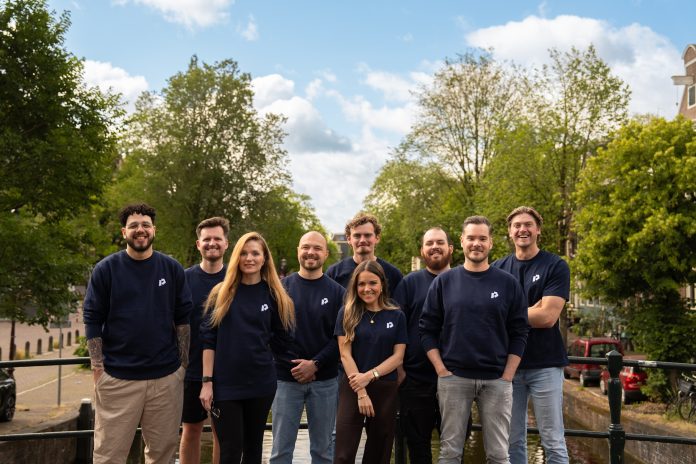
Promptwatch founders following the company’s €6 million seed funding round for its AI search optimization platform.
Promptwatch co-founders Gijs de Groot and Klaas Foppen. The Amsterdam company has raised €6 million in seed funding.

Amsterdam-based Promptwatch has raised €6 million in seed funding to expand its AI search optimization platform and move deeper into the execution layer of generative engine optimization.

The round was led by Berlin-based seed + speed Ventures, with participation from Blum Ventures. Existing investor Arches Capital also returned after backing Promptwatch’s pre-seed round in September 2025.

Promptwatch said the capital will support product development, international expansion and hiring across its engineering and go-to-market teams. The company also plans to establish an office in New York City as it builds closer relationships with US brands, marketing agencies and enterprise customers.

From AI visibility tracking to automated execution

Founded in 2025 by Gijs de Groot and Klaas Foppen, Promptwatch helps companies understand how their brands, products and content appear in answers generated by systems such as ChatGPT, Claude and Perplexity.

The problem differs from traditional search optimization. Marketing teams can track keyword rankings, website traffic and page performance in conventional search. AI assistants may recommend, compare or exclude brands without giving companies the same visibility into which sources shaped the response.

Promptwatch collects data from prompts, AI-generated responses, citations, crawler activity, model changes and different content formats. It then uses that information to identify the sources influencing brand recommendations, locate missing information and detect technical barriers that may prevent AI systems from accessing website content.

The platform extends beyond measurement. Its agentic workflow can prioritize optimization opportunities, generate content designed for AI retrieval and publish approved material through content management integrations including WordPress, Webflow and Framer. The company also offers crawler monitoring, citation analysis, competitor comparisons and prompt-level visibility tracking.

Capital-efficient growth strengthens the funding case

Promptwatch reported passing €2 million in annual recurring revenue in May 2026, approximately 12 months after launch. It had previously raised €1.2 million in pre-seed funding, bringing its disclosed capital raised to approximately €7.2 million.

The funding announcement states that more than 1,840 organizations use the platform, including Duolingo, Fireflies and global marketing company Monks. Promptwatch said its data infrastructure processes more than 10 million data points each day, although other company materials use higher figures.

The company’s early revenue performance appears central to the investment. seed + speed Ventures focuses on early-stage B2B software businesses and typically invests between €500,000 and €2 million initially, alongside commercial support for sales and marketing development.

Why AI search optimization is becoming a software category

The commercial question is no longer limited to whether a company ranks on Google. Brands increasingly need to understand whether AI systems recognize their products, cite reliable information and include them when users request recommendations.

That creates demand for a new software layer connecting content, reputation, technical accessibility, prompt intelligence and measurement. Many early GEO products concentrate on monitoring brand mentions or comparing AI visibility scores. Promptwatch is betting that measurement alone will become difficult to differentiate.

Its strategic bet is an end-to-end workflow: observe how models represent a company, determine why that representation exists and execute the changes needed to improve it.

This approach also places Promptwatch closer to established SEO platforms, content intelligence tools, marketing automation systems and enterprise content management software. The opportunity is meaningful, but the category remains fluid. AI platforms change their retrieval systems, source preferences and answer formats frequently, making durable attribution and performance measurement difficult.

What the €6 million round signals

Promptwatch’s funding points to a broader transition from generative engine monitoring toward operational AI search infrastructure.

Marketing teams are unlikely to adopt another analytics dashboard unless it produces clear actions. Platforms that can connect visibility data with technical fixes, content production, publishing and measurable business outcomes may be better positioned to become part of recurring marketing workflows.

Promptwatch must now demonstrate that automated optimization can improve visibility without creating low-quality content or encouraging brands to chase unstable model behavior. It will also need to prove that AI visibility connects to qualified traffic, customer acquisition and revenue rather than becoming another isolated marketing metric.

The next stage of the category will be shaped by the companies that can turn opaque AI recommendations into an accountable workflow. Promptwatch’s €6 million round gives it additional capital to test whether agentic execution—not monitoring—becomes the defining layer of AI search optimization.

Meta brings Muse Image into the social AI layer

0
Meta Muse Image AI generation interface across Meta AI, Instagram and WhatsApp creative surfaces.
Meta has introduced Muse Image, its first image generation model from Meta Superintelligence Labs.

Meta has introduced Muse Image, its first image generation model from Meta Superintelligence Labs, making the model available in Meta AI and across selected creative experiences inside the company’s apps. The product launch gives Meta a new answer to one of the most important questions in consumer AI: where will image generation actually become a daily habit?

The company says Muse Image can understand complex prompts, blend multiple photos, edit images directly, use suggested presets, and create visuals that can be downloaded or shared into a chat, story or feed. It also powers more than 30 AI effects for Instagram Stories and image generation inside direct chats with Meta AI on WhatsApp, starting in limited countries. Meta says Muse Image is coming soon to Facebook, Messenger and advertisers through Advantage+ creative.

The signal is not only that Meta has another AI image model. The bigger shift is distribution. Image generation is moving from isolated creative tools into social products with billions of user habits already in place. If Meta can make AI creation feel native inside messaging, stories, ads and feeds, the competitive layer may shift from model quality alone to workflow, identity, social context and shareability.

What Muse Image does

Muse Image is designed for both text-to-image generation and image editing. Users can start with a text prompt, work from an existing photo, remove objects, restore old images, generate clean text inside visuals, create infographics, or make edits by circling and sketching directly on an image. Meta says the model can preserve context across a conversation, allowing users to refine images without starting again.

Meta is also leaning into presets. Instead of expecting every user to write detailed prompts, Meta AI now includes suggested prompt panels that can restore family photos, change hairstyles, reimagine a user as a claymation character, or turn a person into a 16-bit video game-style avatar. This matters because prompt design remains one of the friction points in consumer AI. Presets turn image generation from a blank canvas into a tap-led creative experience.

The model also supports room redesigns. Users can photograph a room and ask Meta AI to restyle it with real products from the web or Facebook Marketplace. That points to a commercial use case beyond entertainment: AI-assisted shopping, interior inspiration and marketplace discovery.

The technical angle: Muse Image acts more like an agent

Meta’s AI research blog frames Muse Image as an agentic image generation model rather than a simple prompt-to-image system. Instead of directly mapping a prompt to a visual output, Muse Image can use tools, search for context, write and execute code for certain image tasks, refine its own generations, and use more inference-time compute to improve results.

That technical framing is important. The pressure point in AI image generation is no longer only whether a model can create a beautiful image. It is whether the model can follow instructions, edit specific parts of an image, preserve visual coherence across multiple turns, handle text accurately, blend references, and reason through a user’s intent.

Meta says Muse Image can compose elements from multiple reference images, including people, objects, clothing, styles and environments. The company also says the model can interleave text and image inputs for more complex visual compositions.

This moves Muse Image closer to a creative assistant than a one-shot generator. The commercial question is whether users and advertisers will trust it for repeatable, brand-safe, editable creative work, not just fun experiments.

Why this matters for Meta

For Meta, Muse Image connects directly to three strategic surfaces: consumer AI, social creation and advertising.

On the consumer side, Meta AI becomes more useful when it can create personalized, shareable visuals inside the places people already communicate. On the social side, Instagram Stories and WhatsApp chats give Muse Image built-in distribution. On the advertising side, Advantage+ creative gives Meta a path to make generative visuals part of campaign production for brands and agencies. Meta says advertisers and agencies will be able to access Muse Image through Advantage+ creative in the coming weeks.

The advertising angle may become especially important. If brands can generate, adapt and test visuals inside Meta’s ad system, the creative production cycle could become faster. That would also deepen Meta’s position in the full ad workflow: audience targeting, creative generation, campaign optimization and measurement.

But it also raises harder questions. AI-generated ad creatives need brand consistency, usage rights clarity, content safety, accurate product representation and provenance. Meta’s inclusion of Content Seal, an invisible watermarking system for Muse Image outputs in the Meta AI app and on meta.ai, is one attempt to address provenance. Meta says the watermark is designed to remain intact even when images are cropped, compressed, resized or screenshotted, and that it plans to extend Content Seal to video.

The market signal

Muse Image points to a wider market shift: generative AI media is becoming embedded infrastructure.

Open-ended image tools were the first phase. The next layer is AI creation inside the products where people already express identity, talk to friends, build brands, sell products and run campaigns. Meta’s advantage is not only model development. It is product surface area.

Instagram can turn image generation into a creator feature. WhatsApp can make it conversational. Facebook Marketplace can connect visual redesigns to commerce. Advantage+ creative can make it useful for advertisers. Meta AI can become the central assistant layer that ties those surfaces together.

That gives Meta a different kind of AI distribution than standalone creative startups. The company does not need every user to visit a separate image-generation website. It can insert Muse Image into existing flows: a story effect, a chat prompt, a room redesign, a marketplace idea or an ad creative variation.

The risk is product clutter. If AI effects feel gimmicky, repetitive or low-quality, users may treat them as novelty features. If they are accurate, editable, personal and easy to share, they could become a recurring creative behavior.

What to watch next

The next layer is adoption and control.

Meta says Muse Image is currently available in Meta AI, on meta.ai, Instagram Stories in the US and WhatsApp in limited countries, with Facebook, Messenger and more surfaces coming later. Muse Video is also in development and is expected to come to creators and Meta AI.

What matters now is how Meta balances capability with trust. Image generation inside social platforms touches identity, likeness, public profiles, advertising, shopping and misinformation risk. Meta says users can control whether their Instagram content can be tagged for AI creation through a setting, which will matter as the model begins using public social context in creative outputs.

For consumers, Muse Image is a creativity feature. For creators, it is a faster production tool. For advertisers, it may become part of creative automation. For Meta, it is another step toward making AI native across its family of apps.

The strategic bet is clear: the future of AI image generation may not be won only by the model that produces the best single image. It may be won by the platform that makes generation, editing, sharing and commerce feel like one continuous workflow.

geoSurge raises $12M as AI visibility becomes a board-level question

0
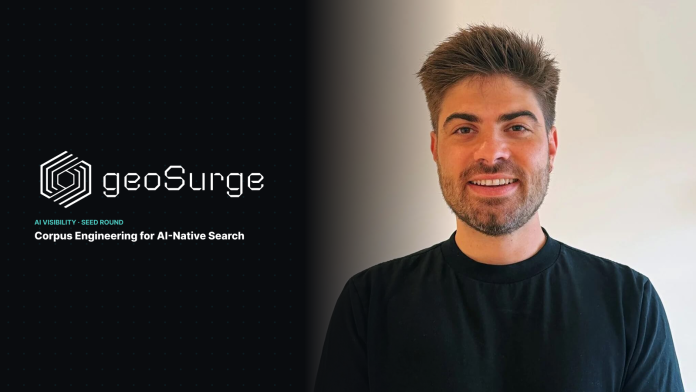
geoSurge AI visibility platform showing how brands are represented inside generative AI systems.
geoSurge has raised $12 million to expand its AI visibility and Corpus Engineering platform.

geoSurge, a London-based AI visibility startup, has raised a $12 million Seed round led by AlbionVC, with participation from Play Ventures, Octopus Ventures, Celero Ventures, Boost Capital, existing investors Passion Capital and Tuesday Capital, and angel investors from Google DeepMind, Microsoft AI, and Signal AI. The company is building around a simple but increasingly important question for brands: what happens when customers stop searching through links and start asking AI systems for answers?

The funding is not just another bet on marketing software. The signal is that AI visibility is becoming a new layer of brand infrastructure. For years, companies optimized for search engines, social feeds, review platforms, and marketplaces. Now the discovery surface is shifting again, this time toward generative AI systems such as ChatGPT, Gemini, and Claude. geoSurge’s thesis is that brands will need to understand not only whether they are cited by AI tools, but how those systems internally understand and represent them.

What geoSurge does

geoSurge helps organizations monitor and improve how they appear inside generative AI answers. Its platform covers visibility across systems including ChatGPT, Claude, and Gemini, while also tracking competitors, sources, trends, and brand mentions. The company’s enterprise product goes deeper, offering features around probabilities, token-level signals, AI traffic classification, crawling, rephrasing, and Corpus Engineering.

The company describes Corpus Engineering as a discipline focused on how large language models learn, store, and surface brand information. In practical terms, geoSurge is positioning itself against the idea that AI visibility is only about tracking prompts or citations. Its argument is that the harder problem is model representation: whether AI systems have accurate, stable, and useful knowledge about a company before they generate an answer.

That distinction matters because AI-generated answers do not behave like traditional search results. A brand may rank well on Google and still fail to appear in a chatbot response. A company may be cited in one prompt, ignored in another, or represented inaccurately when a model version changes. geoSurge’s work sits in that gap between classic SEO, generative engine optimization, brand intelligence, and enterprise AI monitoring.

The funding details

The $12 million Seed round was led by AlbionVC. Other investors include Play Ventures, Octopus Ventures, Celero Ventures, Boost Capital Partners, Passion Capital, Tuesday Capital, and angels from Google DeepMind, Microsoft AI, and Signal AI. UKTN reported the round at £9.4 million, while EU-Startups reported it as €10 million, reflecting currency conversion of the same $12 million round.

geoSurge plans to use the funding to grow its global research and engineering teams, invest in AI infrastructure and compute capacity, and accelerate development of its Corpus Engineering discipline. The company says it already works with customers across four continents and industries including financial services, education, and hospitality. Since emerging from stealth in 2025, its headcount has doubled, with 80% of employees specializing in AI and data science.

Why this matters now

The commercial question is no longer only whether a company appears on page one of Google. It is whether AI systems mention the company at all, describe it correctly, compare it fairly, and include it when users ask for recommendations.

That changes the visibility economy. In search, the user sees links. In social, the user sees posts. In AI search, the user may see a synthesized answer with only a few cited sources, or no traditional browsing journey at all. This creates a new pressure point for enterprises: if buyers use AI systems to shortlist vendors, research tools, compare products, or decide where to spend money, model representation becomes a business risk.

geoSurge’s approach is built around the belief that prompt-level analytics and citation tracking may become commoditized. The company is betting that the more defensible layer is understanding how models learn and remember brand information. Its official site describes enterprise work at the level of model probabilities and token-level visibility, not just surface ranking.

The market signal

The bigger shift is that AI visibility is becoming its own category. Early versions of the market focused on generative engine optimization, prompt tracking, and citation monitoring. Those tools answer an important question: “Did the model mention us?” geoSurge is trying to answer a deeper one: “Why does the model understand us this way, and how can that representation become more accurate over time?”

That could matter most for companies in complex, high-consideration markets: enterprise software, financial services, healthcare, travel, education, cybersecurity, and B2B infrastructure. These are categories where buyers often research before purchasing, compare multiple vendors, and rely on trusted explanations. If generative AI becomes part of that workflow, brand memory inside models becomes part of go-to-market strategy.

There is also a risk. The category is early, terminology is still unsettled, and platforms such as OpenAI, Google, Anthropic, and Perplexity will keep changing how answers are generated, retrieved, cited, and personalized. Companies buying AI visibility tools will need to separate measurable insight from speculative optimization. The useful vendors will be the ones that can show evidence, methodology, and repeatable outcomes without promising control over systems they do not own.

What to watch next

The next layer is proof. geoSurge has funding, a strong category narrative, and technical positioning around Corpus Engineering. What investors, enterprises, and competitors will watch next is whether the company can turn that thesis into measurable commercial outcomes.

Key questions remain: Can AI visibility be tied to pipeline, conversions, or brand preference? Will enterprises treat AI representation as a marketing function, a data function, or a risk function? Will model providers expose more visibility and attribution data over time, or will third-party tools need to infer it from outside?

For now, geoSurge’s Seed round points to a broader market reality: AI discovery is no longer a future concern. It is becoming a live operating question for brands that depend on being found, understood, and trusted in machine-generated answers.